



Insulation Testers
Our range of products for insulation testers

HandHeld | PE-resistance and insulation resistance tester
- protective conductor resistance test up to 10 A AC
- insulation resistance test up to 1,000 V
- mobile – lightweight – indoor/outdoor
- transport case – carrying strap
- PC software
- attractive acquisition costs …
- hospital service
- rotor blade lightning protection test on wind turbines …

GLP1-g | PE conductor, insulation, high voltage and function testing device
The smallest safety tester in the world!
- PE/GB-resistance testers
- insulation resistance testers – IR
- high voltage testers AC/DC
- safety & function testers
- 50+ device configurations – combining up to 9 test methods in one device
- PLe, SIL3, Kat4 safety circuit (depending on device variant and degree of risk)
- table-top unit or 19″ rack mounting
- ½ 19″ or 19″ format
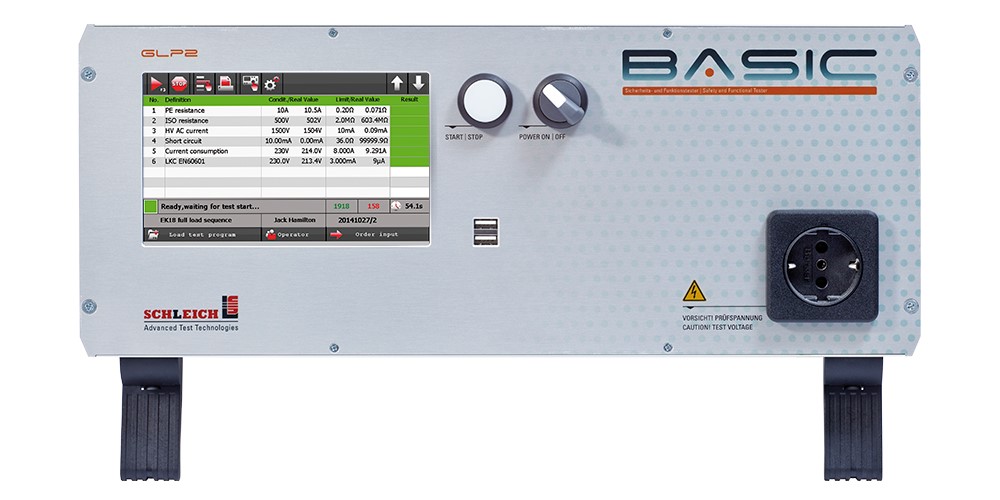
GLP2-BASIC | Protective conductor, insulation, high voltage, leakage current and function tester
- insulation Resistance testers – IR
- high voltage testers AC/DC
- “All in one” testers
- safety & function testers
- app. 40 device variants – combined from up to 21 test methods
- PLe, SIL3, Kat4 safety circuit (depending on device variant and degree of risk)
- network
- protocol & label printing
- scanner …
- Technology Package for even more ergonomics
- table-top unit or 19″ rack mounting
GLP2-MODULAR | Combination tester with up to 25 test methods
- “All in one”
- safety testers
- safety & function testers
- modular combination of more than 25 test methods possible
- up to 250 test connections
- large switch matrix modules for all kind test methods
- PLe, SIL3, Kat4 Safety circuit (depending on device variant and degree of risk)
- network
- protocol & label printing
- scanner …
- Technology Package for even more ergonomics
Was Sie schon immer über die Isolationsprüfung wissen wollten.
Die Isolationsprüfung (weltweit auch “IR”-Test genannt) ermittelt den Isolationswiderstand in Messbereichen von kΩ bis TΩ. Viele Prüfvorschriften (z. B. VDE, EN, IEC, UL …) verlangen die Messung und Beurteilung des Isolationswiderstands.
Warum ist die Isolatonsprüfung so wichtig?
Waschmaschine, Elektromotor, Leuchte … diese und fast alle anderen Elektroprodukte sowie Elektroanlagen können nur dann sicher betrieben werden, wenn sie eine hohe elektrische Isolationsfestigkeit aufweisen.
Eine schlechte Isolation führt im schlimmsten Fall zu Elektrounfällen mit schweren Verletzungen oder Todesfolge, oder auch zu erheblichen Produktschäden.
Mit der Isolationsprüfung ermitteln Sie die Isolationsqualität Ihres Prüfobjekts. Die Überprüfung der Elektroprodukte erfolgt mit Prüfspannungen zwischen typisch 500 bis 1.000 VDC.
Um nahezu alle Bereiche der Isolationsprüfung abzudecken, liefert SCHLEICH auf Basis einer sehr umfangreichen Palette Isolationsprüfgeräte von 25 V bis zu 50.000 VDC.
Wo wird im Prüfobjekt geprüft?
Geprüft wird zwischen allen stromführenden Leitern sowie von stromführenden Leitern zum Gehäuse.
Prinzipiell findet die Isoaltionsprüfung zwischen denselben Prüfanschlüssen wie die Hochspannungsprüfung statt.
Welche Fehler deckt die Isolationsprüfung auf?
- Isolationsschwächen zwischen beliebigen elektrischen Leitern zum Schutzleiter / Gerätegehäuse
- Isolationsschwächen zwischen den elektrischen Leitern
- Schlechte Isolation an Luft- und Kriechstrecken
Was sind die gut/schlecht Kriterien?
Die Beurteilung der Isolationsprüfung erfolgt immer auf Basis des ohmschen Isolationswiderstands, der zwischen den beiden Polen der Prüfspannung gemessen wird. Er darf ein einstellbares Limit nicht unterschreiten.
Isolationsprüfung immer mit DC.
Die Isolationsprüfung findet grundsätzlich mit einer DC-Prüfspannung statt.
Warum?
Häufig haben Prüfobjekte auf Grund von Filterkondensatoren oder auch aufgrund ihrer physikalischen Bauweise unvermeidbare Kapazitäten. Die Prüfung mit AC hätte den Nachteil, dass durch diese Kapazitäten ein hoher kapazitiver Ableitstrom fließen würde. Der reelle Widerstand ließe sich unter solchen Bedingungen nicht präzise genug bestimmen.
Wird hingegen mit DC geprüft, spielt die Kapazität nur eine untergeordnete Rolle. Nach dem Aufladen der Kapazität fließt nur noch ein sehr kleiner Isolationsstrom durch den Isolationswiderstand.
Auf der Basis der anliegenden Spannung und des fließenden Stroms wird über das ohmsche Gesetz der Isolationswiderstand berechnet.
Wie wird die Isolationsprüfung durchgeführt?
Ob manuell, teil- oder vollautomatisch: mit Isolationsprüfgeräten von SCHLEICH lässt sich jede Prüfaufgabe schnell und effizient durchführen.
Unsere Prüfgeräte sind alle nach dem „KISS-Prinzip“ konstruiert. Also nach dem Motto: »Keep It Simple and Smart«. Das Prinzip gilt als Leitmotiv für alle SCHLEICH-Produkte.
Für die Anforderungen von Produktionsbetrieben bieten sich eher teil- oder vollautomatisierte Isolationsprüfgeräte bzw. Isolationsprüfautomaten an. Hierzu sind die Prüfgeräte mit einem Relais-Umschaltfeld (Relais-Matrix) ausgestattet. Diese schalten die Prüfspannung automatisch an die gewünschten Prüfpunkte. Eine manuelle Prüfung erfolgt mit einer Prüfsonde. Der Bediener führt hierzu die Prüfsonde per Hand von Prüfpunkt zu Prüfpunkt. Trotz des manuellen Ablaufs lässt sich die Prüfung aber einwandfrei dokumentieren. Eine typische Anwendung ist hierbei die Überprüfung von Elektroprodukten, Schaltschränken und Maschinen nach der Maschinenrichtlinie EN60204.
Prüfsysteme dieser Art haben abhängig vom Anwendungsfall bis zu 1.000 Prüfanschlüsse.
Sichere Durchführung der Isolationsprüfung.
Das Arbeiten mit hohen Prüfspannungen ist nicht ungefährlich. Deshalb sind entsprechende Sicherheitsvorschriften einzuhalten.
Bei SCHLEICH-Isolationsprüfgeräten ist der Prüfstrom grundsätzlich begrenzt. Die integrierte Sicherheitsstrombegrenzung begrenzt den Prüfstrom auf max. 3 bis 12 mA DC. Diese Begrenzung erlaubt es, die Isolationsprüfgeräte ohne Prüfhauben zu betreiben.
Allerdings muss auch noch ein zweites Kriterium berücksichtigt werden:
Viele Prüfobjekte haben aufgrund ihrer Bauweise eine unvermeidbare Kapazität. Diese Kapazität wird während der Prüfung aufgeladen und speichert die Ladung. Die maximal gespeicherte Energie darf 125 mJ (Q = 1/2 x C x U2) nicht überschreiten. Andernfalls könnte der Bediener noch nach der Prüfung beim Berühren des Prüfobjekts einen gefährlichen elektrischen Schlag aufgrund der Restladung/Restspannung bekommen.
Sofern nach Abschluss der Prüfung das Prüfgerät immer noch mit dem Prüfobjekt verbunden ist, sorgt das Prüfgerät intern für die sichere Entladung.
Sollte dies aber nicht zuverlässig gewährleistet sein, kommen als Schutzmaßnahme Prüfhauben, Prüfkabinen, Lichtvorhänge oder Absperrketten zum Einsatz.
Potenzialfreie Isolationsprüfung?
In den meisten Anwendungsfällen kommt die potenzialfreie Isolationsprüfung zum Einsatz. Typisch ist sie für die Verwendung von Prüfsonden bis 1.000 V DC oder bei Sicherheitsprüfpistolen bis 10.000 V DC. Sie gewährleistet die höchste Sicherheit für den Anwender.
Bei höheren Hochspannungen ab 15.000 V aufwärts ist in der Regel die Prüfspannung einseitig geerdet.
Was Sie bei einer Isolationsprüfung sonst noch beachten müssen!
Um die Isolationsprüfung korrekt durchzuführen ist sicherzustellen, dass das Prüfobjekt auch tatsächlich mit der Prüfspannung verbunden ist. Die Kontrolle einer korrekt durchgeführten Prüfung erfolgt über zwei mögliche Varianten der Kontaktierüberwachung:
- Vorgabe eines Aufladestroms: Vorteilhaft für Prüfobjekte, die zwischen den Prüfpunkten eine Kapazität haben. Fließt ein messbarer Ladestrom während des Einschaltens der Prüfspannung kann man sicher sein, dass das Prüfobjekt korrekt mit dem Prüfgerät verbunden ist.
- Messung der am Prüfobjekt tatsächliche anliegenden Spannung: Dazu werden zwei zusätzliche Sense-Leitungen ergänzend zu den Prüfleitungen mit dem Prüfobjekt verbunden. Häufig wird diese Art der Messung auch Vierleitermessung genannt. Über die beiden Sense-Leitungen erfolgt die Messung der am Prüfobjekt tatsächlich anliegenden Prüfspannung. Diese Spannung wird mit einem Vorgabewert verglichen. Deshalb wird dieses Kontrollverfahren Spannungsrückmessung genannt.
Was ist mit einer Isolationsprüfung sonst noch messbar?
Ergänzend zu Isolationsprüfung ist auch die Messung des PI (Polarisationsindex) oder des DAR (“Dielectric Absorption Ratio”) möglich.
Dies sind keine typischen Sicherheitsprüfmethoden. Sie werden aber zur vorbeugenden Instandhaltung häufig verwendet.
Anforderungen an ein Standard-Isolationssprüfgerät?
Die meisten nationalen und internationalen Normen verlangen eine Prüfspannung von 500 V DC.
Viele SCHLEICH-Isolationsprüfgeräte haben deshalb eine variabel vorgebbare Prüfspannungen von 50 bis 1.000 VDC.
SCHLEICH-Isolationsprüfgeräte sind typischerweise mit einer reaktionsschnellen elektronischen DC-Prüfspannungsquelle ausgestattet. Diese erlaubt geräteabhängig auch das präzise Abfahren von Spannungsprofilen.
SCHLEICH-Isolationsprüfgeräte basieren auf der Erfahrung von über 30 Jahren. Von Anfang an war die Messtechnik nicht analog sondern immer digital. Grundsätzlich kommen immer modernste Technologien zur Anwendung.
Wie finden Sie das passende Isolationsprüfgerät?
Die Anzahl der am Markt verfügbaren Isolationsprüfgeräte ist groß, und die die Menge der konfigurierbaren Features überwältigend.
Sofern Sie an Ihrem Prüfobjekt ausschließlich Isolationsprüfungen durchführen möchten, sind Sie mit einem Einzelprüfgerät gut beraten. Es enthält nur eine einzige Prüfmethode, nämlich die Isolationsprüfung.
Erfordert das Prüfobjekt auch einen umfassenderen Sicherheits- und Funktionscheck empfehlen wir unsere Kombinationsprüfgeräte/Multifunktionstester. Hiermit lassen sich verschiedene Prüfmethoden wie beispielsweise Isolations-, Hochspannungs- und Schutzleiterwiderstandsprüfung bequem in einem Prüfgerät kombinieren. Die im Prüfgerät integrierte Prüfmethodenumschaltung sorgt dafür, dass während der Prüfung keine Messleitungen am Prüfobjekt manuell umzuklemmen sind.
Darüber hinaus findet man auch sehr häufig die Kombination aus den Sicherheitsprüfungen und umfangreichen Funktionsprüfungen. Zur Funktionsprüfung versorgt das Prüfgerät das Prüfobjekt zusätzlich mit elektrischer Betriebsspannung, um auch die elektrischen Betriebseigenschaften zu überprüfen.
Durch die intuitive und komfortable Bedienung unserer Isolationsprüfgeräte erfolgt jede Prüfung schnell, präzise und kostensparend.
Das SCHLEICH Produktportfolio
- Prüfspannung von 25 V bis zu 50 kV DC
- Messbereiche von kΩ, MΩ, GΩ und TΩ
- Mit elektronischer, automatisch geregelter Prüfspannung
- Mit integrierter Entladung und Entladungsüberwachung
- Standardisierte Schnittstellen wie RS 232, Ethernet/LAN, USB zur PC-Kommunikation
- 24 V digital I/O zur SPS-Kommunikation
- Erweiterbar auf Industrial Ethernet und Feldbussysteme zur SPS-Kommunikation
- Nahezu unbegrenzter Speicherplatz für Prüfpläne und Prüfergebnisse
- Alle Parameter über die Software bestimmt
Darüber hinaus planen, konstruieren und produzieren wir für Sie gerne individuell zugeschnittene Lösungen:
- Kombinationstester/Multifunktionstester
- Prüfautomaten/Prüfsysteme mit kleiner bis komplexer Relaismatrix
- Komplette Prüfarbeitsplätze
- Fertigungslinien mit Transfersystemen
- EOL-Arbeitsplätze
- Großanlagen
Achten Sie bei der Auswahl Ihres Isolationsprüfgeräts auch auf die „Softskills” des Anbieters. Wir bieten alles notwendige Zubehör und begleiten Sie während der gesamten Nutzungsdauer Ihres Isolationsprüfgeräts:
- Professionelle Beratung mit Knowhow
- Sorgfältige Erstinbetriebnahme
- Regelmäßige zertifizierte Kalibrierung
- AfterSales-Betreuung durch unserer Serviceteam
- Service am Telefon oder vor Ort
- Maßgeschneiderte Schulungen
SCHLEICH – weltweit einziger Anbieter von Isolationsprüfgeräten, der schon viermal mit dem Gütesiegel „TOP100 Innovator” ausgezeichnet wurde.

Product consultant
Are you looking for a personal consultation?
Please contact us directly: +49 2372 901 25 40
Or simply send us your questions via e-mail.
E-mail inquiry